The reading–spelling disconnect
This is a very homeschool moment:
After a lot of phonics work, your child finally starts reading. You breathe. You think, “We did it.”
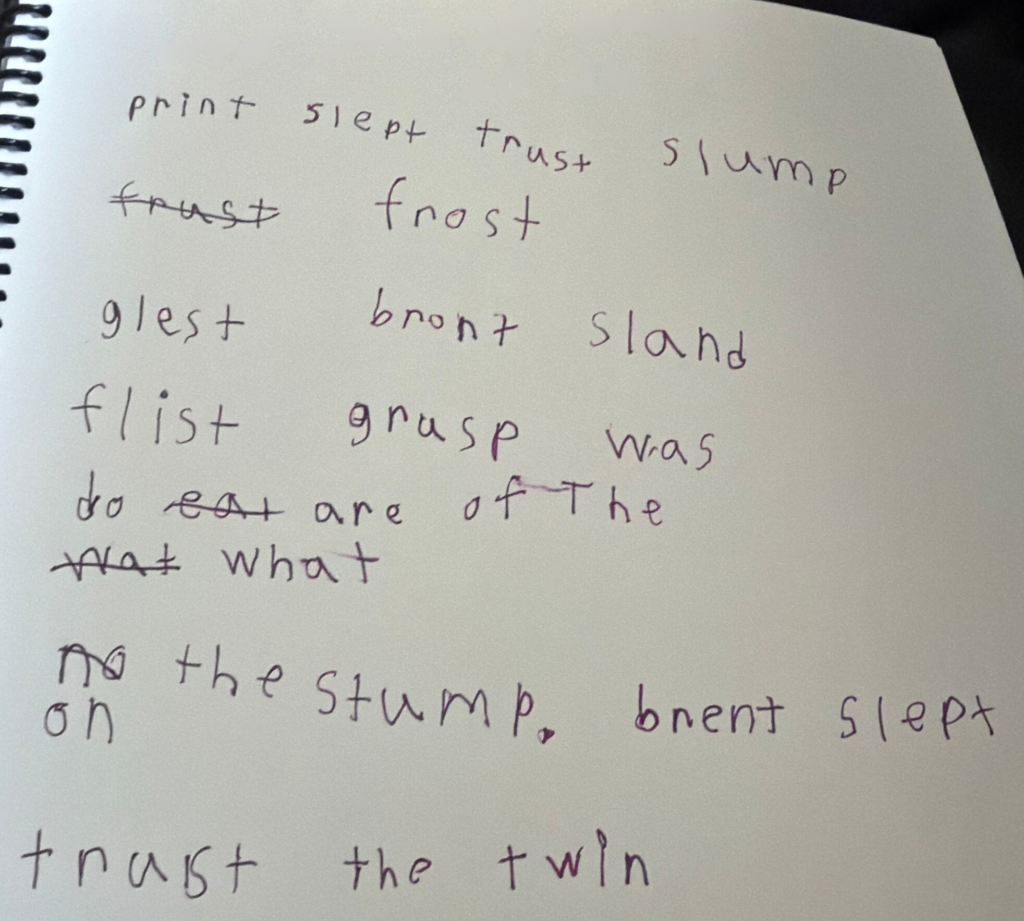
Then you look at their writing.
The spelling can look like a different kid wrote it. And you’re left thinking:
How can they read that word… but not spell it?
That disconnect is common for dyslexia. Reading may improve, while spelling stays stubbornly messy.
The truth in one sentence
Reading is decoding. Spelling is encoding. Encoding is usually harder.
- Reading = seeing letters and turning them into sounds
- Spelling = hearing sounds and turning them into the exact letters in the right order
Same foundation. Different task.
Spelling demands more precision.
Why spelling is often harder for dyslexic learners
Spelling is the heavy-lifting side of literacy. Here’s why it often lags behind reading:
Spelling is a “choice” problem
When reading, you can recognize a pattern.
When spelling, you have to choose the correct one.
Example: long e can be spelled e, ee, ea, ie, y, e-e (and more)
Some sounds are easy to confuse
Kids may mix up sounds like:
- /b/ and /p/
- /d/ and /t/
They’re often writing what they think they hear.
Keeping letters in order is hard
Some students know the sounds but lose the sequence when writing:
- letters dropped
- letters swapped
- letters repeated
Spelling uses a lot of brain “bandwidth”
Handwriting + remembering the rule + choosing the pattern + holding the word in memory…
That’s a lot.
When the load gets too high, spelling is usually the first thing to fall apart.
“Very phonetic spelling” isn’t laziness. It’s logic.
If your child writes:
- wuz for was
- sed for said
Their brain is trying to be consistent.
They just haven’t been taught the spelling patterns and rules yet.
And no—spelling usually doesn’t fix itself with age.
Reading may improve over time.
Spelling usually does not without direct instruction.
What effective spelling instruction looks like
If spelling isn’t improving, the answer usually isn’t “more lists.”
It’s better structure.
Explicit teaching
Rules and patterns are taught directly.
No guessing. No “just notice it.”
A clear scope and sequence
Skills build in order:
- simple → complex
- predictable → less predictable
Words grouped by pattern (not theme)
Lists should match the rule:
- NOT “summer words”
- NOT random vocabulary
Multisensory practice
- Saying sounds while writing
- Using tiles
- Tapping sounds
This helps the brain lock in patterns.
Fluency practice
Not just “know the rule”—apply it automatically.
- quick reads
- quick writes
- short timed practice (when appropriate)
Why traditional spelling methods often flop
If your spelling program feels like a time sink, you’re not imagining it.
Most traditional methods fail dyslexic learners because they rely on the wrong things:
Memorization and visual memory
Many dyslexic learners don’t store stable “mental pictures” of words.
Random lists with no logic
The brain has nowhere to file the words.
So nothing sticks.
Cram-and-forget tests
Pass Friday. Forget by Monday.
The exposure myth
Reading more does not reliably teach spelling patterns.
A simple 10-minute homeschool spelling routine (4 days/week)
You don’t need an hour.
You need consistency and a plan.
Day 1: Teach one rule or pattern
- State the rule clearly
- Read example words
- Keep it short
Day 2: Build and sort words
- Use tiles (physical or digital)
- Sort by pattern
- Fill in missing parts (ex: gla__ → ss)
Day 3: Short fluency drill
- 60 seconds of reading pattern words
- Track number correct
Day 4: Dictation and real use
- Dictate short sentences
- Have your child create sentences for tricky words (to/too/two)
What to Do This Week
1. Look at your child’s unedited writing
If you see:
- kat for cat
That’s not laziness.
That’s your child saying:
“I’m using sound logic, but I need the rules.”
2. Ask this before choosing a tutor or program
“What is your scope and sequence for decoding and spelling, and how do you measure mastery?”
If the answer is vague—keep looking.
3. Don’t let spelling block big thinking
While building spelling skills:
Use speech-to-text so ideas aren’t held hostage by mechanics.
Next Step
Spelling doesn’t improve with time alone.
It improves with structured instruction that:
- teaches patterns clearly
- practices them until they stick
Keep Reading
If this helped, here are the next steps to understand what’s really going on with your child’s reading:
- 👉 Phonics vs. Structured Literacy: Why Your Program Might Be Failing
- 👉 Why Guessing Words Is Holding Your Child Back
- 👉 Smart Kids With Dyslexia: Why Bright Children Still Struggle to Read
If you’re ready to help your child build both reading and spelling the right way:
References & Further Reading
- International Dyslexia Association (IDA)
- Understood.org
- Reading Rockets
- Yale Center for Dyslexia & Creativity
Note: This article is for educational purposes and isn’t a diagnosis. If you want help understanding your child’s reading profile and the best next steps, you can schedule an intake call by clicking the “Schedule an Intake Call” button above.