Many parents notice something confusing when their child reads. They might recognize a word on one page and miss the exact same word on the next.
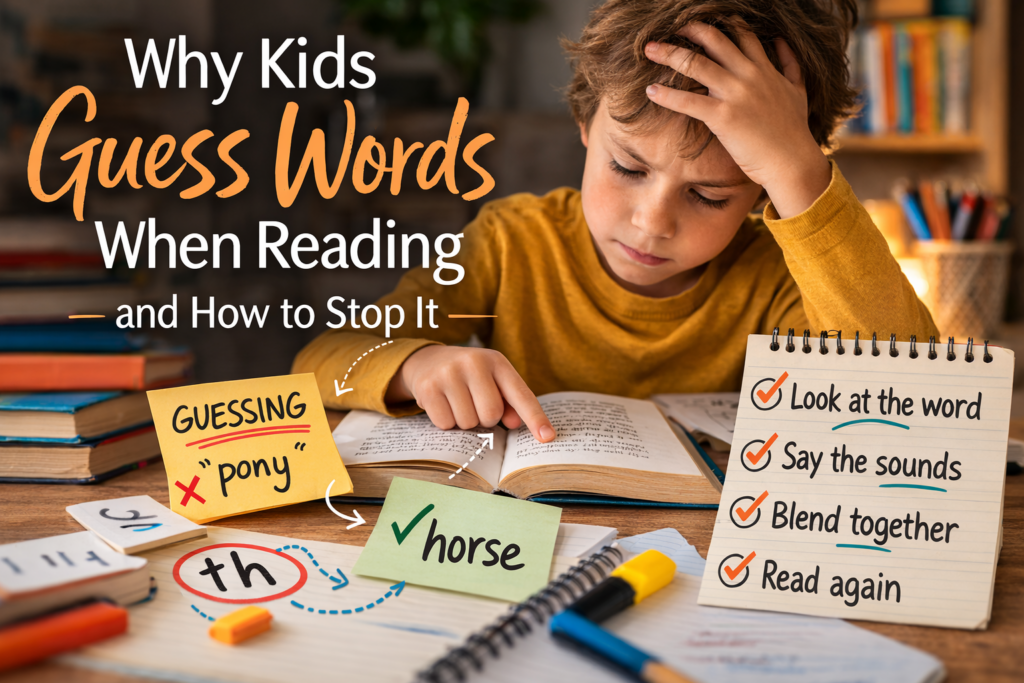
Or they might confidently read “pony” when the word is actually “horse.”
That kind of reading isn’t laziness. It’s guessing.
Guessing is extremely common in struggling readers, especially children with dyslexia. In fact, many children were accidentally trained to guess by the way reading was taught.
Why Guessing Happens
Many reading programs teach children to use “clues” when they get stuck. You may have heard prompts like:
Look at the picture.
What word would make sense?
Skip the word and keep going.
What sounds right?
Those prompts were designed to help beginning readers move through books more smoothly. The problem is that they train the brain to look away from the word instead of through the word.
When guessing becomes the habit, decoding never becomes automatic. As books get harder and pictures disappear, the strategy collapses.
What Strong Readers Actually Do
Strong readers do not guess words from context.
They move through the word from left to right, connecting letters to sounds and blending those sounds together.
This process is called decoding, and it is the foundation of skilled reading.
Context and meaning still matter, but they come after the word has been read correctly. Meaning acts as a double-check, not the first strategy.
Why Guessing Is Especially Hard for Dyslexic Readers
Children with dyslexia often have difficulty mapping sounds to letters automatically.
If decoding feels slow or unreliable, the brain naturally looks for shortcuts. Guessing becomes the fastest option.
Unfortunately, the more guessing is practiced, the stronger the habit becomes.
Instead of building a reliable reading system, the child becomes dependent on context clues and visual memory.
How to Break the Guessing Habit
Breaking the guessing habit requires instruction that brings attention back to the print.
When a child gets stuck on a word, the goal is to guide them back to the letters and sounds.
Simple prompts like these can help:
- Point under the word
- Say the sounds
- Blend the sounds together
- Read the sentence again
What Parents Should Focus On
If your child relies on guessing, the solution is not more reading practice alone.
They need structured instruction that teaches the patterns of the English language step by step.
This approach is called Structured Literacy. It builds reading and spelling through explicit, systematic teaching instead of guessing strategies.
If your child struggles with guessing, decoding, or spelling, a structured literacy approach can make reading far more predictable and manageable.
References & Further Reading
• International Dyslexia Association
• Understood.org
• Reading Rockets
• National Reading Panel
You can learn more about how structured literacy works or schedule a reading assessment at CampLearningStudio.com.
Note: This article is for educational purposes and isn’t a diagnosis. If you want help understanding your child’s reading profile and the best next steps, you can schedule an intake call by clicking the “Schedule an Intake Call” button above.