The Waiting Trap
It’s one of the most common reassurances parents hear:
“Let’s just give it time.”
“They’ll grow out of it.”
“Some kids just develop later.”
It sounds reasonable. Comforting, even.
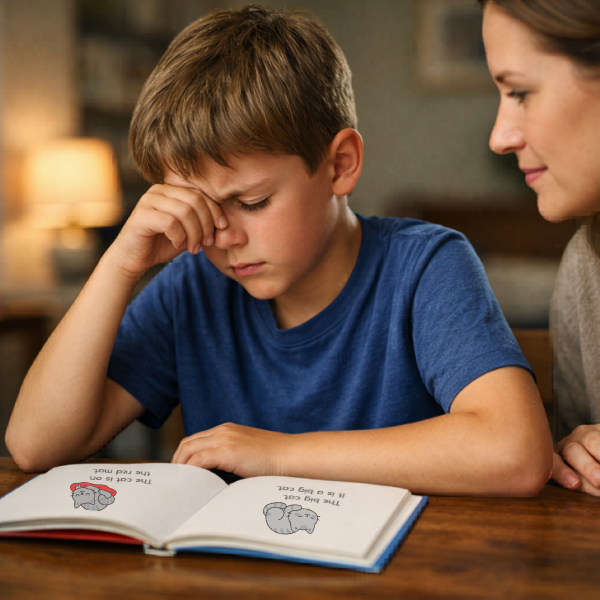
But for many struggling readers, waiting doesn’t solve the problem.
It quietly makes it worse.
The Core Truth
Reading is not a natural process that unfolds automatically with time.
It is a learned skill that depends on specific instruction.
When a child struggles to read, it’s usually because they are missing underlying skills—not because they need more time.
Time without the right instruction doesn’t close the gap.
It widens it.
What Actually Happens When You Wait
When reading doesn’t come easily, kids don’t just stay in the same place.
They adapt.
And those adaptations often create bigger problems over time.
They Learn to Guess
Instead of decoding, they rely on pictures, first letters, or memorized patterns.
This might look like progress in the early grades.
But it breaks down quickly as texts become more complex.
They Avoid Reading
Reading starts to feel frustrating, slow, and exhausting.
So they avoid it whenever possible.
Less reading means less practice—which leads to even slower progress.
They Fall Behind in Other Subjects
By third grade, reading becomes the gateway to learning.
If a child struggles to read, they struggle to access science, history, and even math word problems.
It’s not just a reading issue anymore.
It becomes a learning issue.
They Lose Confidence
Kids notice when something feels harder for them than it does for their peers.
Even if they can’t explain it, they feel it.
Over time, that frustration turns into:
“I’m not good at this.”
“I hate reading.”
“I’m just not smart.”
Why Early Action Matters
The earlier you address reading difficulties, the easier it is to correct them.
You’re not undoing years of habits.
You’re building skills correctly from the start.
Early intervention is not about labeling a child.
It’s about giving them access to the tools they need before frustration builds.
What to Look For
If your child is:
- Guessing at words instead of sounding them out
- Avoiding reading or becoming emotional during reading
- Struggling to remember common words
- Reading slowly and with effort
These are signs that more support—not more time—is needed.
What Actually Helps
Struggling readers need:
- Explicit instruction in how sounds and letters work together
- A structured, step-by-step approach to decoding and spelling
- Practice with text that matches what they’ve been taught
This is often called Structured Literacy.
It is systematic, direct, and designed for how the brain learns to read.
The Bottom Line
Waiting feels safe.
But in reading, waiting is rarely neutral.
It usually means:
More guessing
More frustration
More gaps to close later
The good news?
With the right instruction, progress can happen.
And it can happen faster than most parents expect.
Related Reading
- Why Kids Melt Down During Reading (And What to Do Instead of Pushing Harder)
- Why Kids Guess Words When Reading (And How to Stop It)
- Predictable Books vs Decodable Books
Next Step
If you’re wondering whether your child just needs more time—or needs a different approach—it helps to get a clear picture of what’s actually going on.
CampLearningStudio.com offers weekday daytime tutoring designed specifically for students who need structured, effective reading support.
References & Further Reading
- International Dyslexia Association (IDA)
- Understood.org
- Reading Rockets
Note: This article is for educational purposes and isn’t a diagnosis. If you want help understanding your child’s reading profile and the best next steps, you can schedule an intake call by clicking the “Schedule an Intake Call” button above.