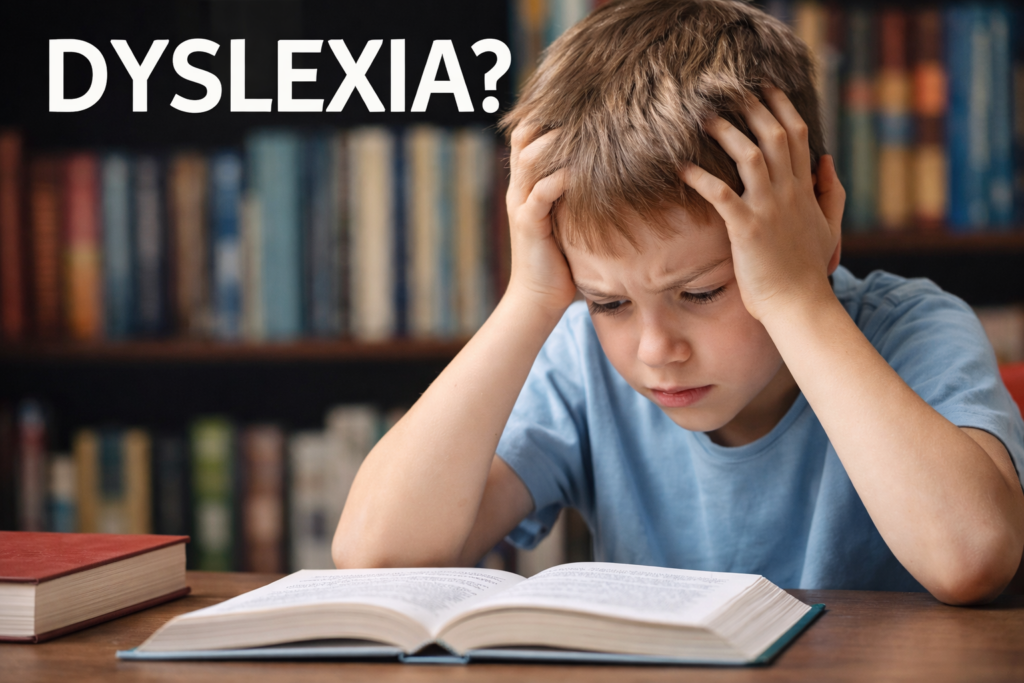
Most parents first notice something is wrong with reading long before anyone says the word dyslexia.
Many parents describe the same feeling: something just doesn’t add up. Their child might be bright, curious, and capable in so many areas—but reading, spelling, or writing seems unusually difficult. Homework becomes stressful. Reading practice leads to frustration or tears. Teachers may say, “They just need more practice,” but progress still feels painfully slow.
In many cases, these early struggles are actually signs of dyslexia.
Common Signs of Dyslexia
- Difficulty learning letter sounds
- Trouble sounding out simple words
- Guessing words instead of decoding them
- Difficulty remembering how to spell common words
- Avoiding reading whenever possible
Many parents notice these patterns for months or even years before anyone suggests testing for dyslexia.
If your child struggles with several of these signs, it does not automatically mean they have dyslexia. However, it is a strong signal that their reading system needs closer attention and the right kind of instruction.
What Parents Should Do Next
If you are seeing these warning signs, the most important step is to look beyond extra practice or guessing strategies. Children with dyslexia need explicit, systematic reading instruction that directly teaches how the English language works.
If you want a clear plan for helping your child build real reading and spelling skills, you can start by scheduling a reading assessment. This allows us to identify exactly where the breakdown is happening and what instruction will help your child move forward.
Note: This article is for educational purposes and isn’t a diagnosis. If you want help understanding your child’s reading profile and the best next steps, you can schedule an intake call by clicking the “Schedule an Intake Call” button above.